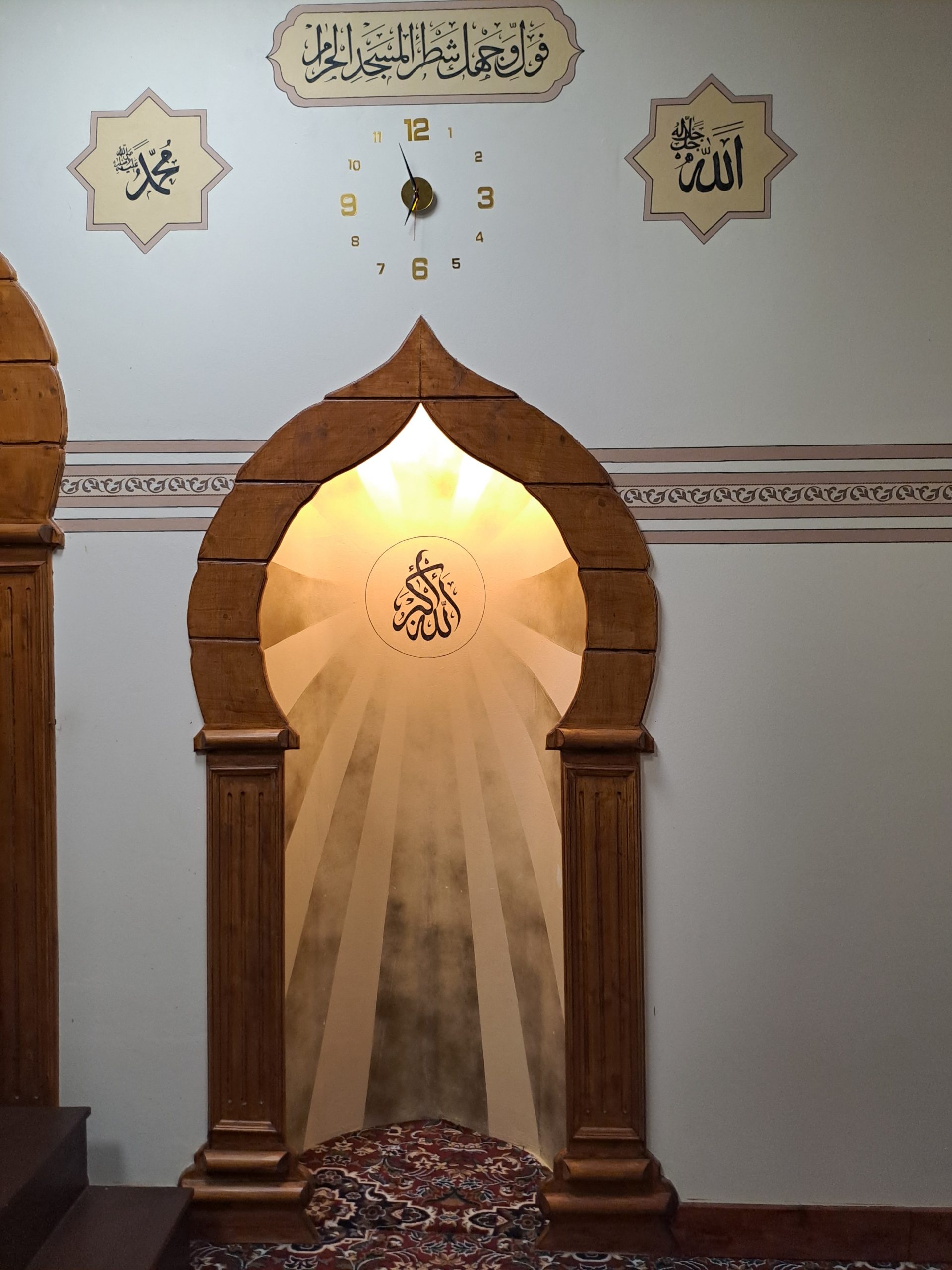
Friday khutba – 6 February 2026 (18 Sha‘bān 1447 AH)
Cautious God-Consciousness and Avoiding Doubtful Matters
All praise is due to Allah. We worship Him alone and seek His help. We bear witness that there is no deity worthy of worship except Allah, and that Muhammad (ṣallā Allāhu ʿalayhi wa sallam) is His servant and His Messenger.
“O you who believe, be mindful of Allah and speak words of truth and justice. He will rectify your deeds and forgive your sins. And whoever obeys Allah and His Messenger has indeed attained a great success.”
Cautious God-consciousness (waraʿ) means refraining from everything one fears may cause harm or lead to wrongdoing. In Islamic teaching, it refers to avoiding doubtful matters, as the Prophet (ṣallā Allāhu ʿalayhi wa sallam) said: “Leave that which causes you doubt for that which does not cause you doubt.”
A person of waraʿ does not act until he is confident that what he does is permissible. When doubt arises, abstention is safer and more virtuous, for integrity in conduct is among the greatest values of this religion. True piety does not mean self-torment, neglecting obligations, or excess in recommended acts. Rather, it lies in balance: avoiding what is unlawful and what is unclear, fulfilling rights, and ensuring that one’s wealth and actions are free from anything forbidden.
For this reason, scholars placed great emphasis on God-consciousness in dealings, trade, financial transactions, and speech. Many people falter not in prayer or fasting, but in matters where the rights of others are violated. It is a grave mistake to think that extremism is piety, or that restricting what Allah has made lawful is a sign of righteousness. True piety is founded upon knowledge and justice. Islam seeks to bring benefit and prevent harm, whereas extremism has no place in the religion.
The Prophet (ṣallā Allāhu ʿalayhi wa sallam) corrected this misunderstanding when some of his Companions thought that piety required abandoning even lawful matters. He said:
“I am the most God-fearing among you, yet I fast and break my fast, I pray and I rest, and I marry.”
Through this, he taught that true God-consciousness does not oppose human nature but follows divine guidance. Likewise, when he saw a man torturing himself by standing in the sun, he said: “Allah has no need for a person to punish himself.”
Excess and self-harm do not bring one closer to Allah.
Servants of Allah, the Prophet (ṣallā Allāhu ʿalayhi wa sallam) summarized the essence of piety in one statement: “Avoid what is forbidden, and you will be the most devoted of people.”
True worship is not measured by the abundance of voluntary acts while disregarding prohibitions. ʿUmar ibn al-Khaṭṭāb (raḍiya Allāhu ʿanhu) said:
“God-consciousness is abandoning what is forbidden.”
Some of the early scholars said: “To leave a single minor prohibition is dearer to me than performing many voluntary acts of worship.”
What, then, of those who wrong people in their wealth yet assume that voluntary worship will erase their injustice? For this reason, scholars advised merchants that fearing Allah in transactions is more important than outward displays of devotion.
One of the highest forms of God-consciousness is avoiding doubtful matters. The Prophet (ṣallā Allāhu ʿalayhi wa sallam) said: “Whoever avoids doubtful matters has safeguarded his religion and his honor.”
How many people are diligent in prayer and fasting, yet when it comes to business and dealings, their piety disappears and the rights of others are violated without shame. Allah teaches us that piety is not confined to rituals, but is manifested in justice, fulfillment of rights, and avoiding oppression—especially when dealing with the weak.
The Prophet (ṣallā Allāhu ʿalayhi wa sallam) was the living embodiment of God-consciousness. He would refrain from eating dates out of fear that they might be charity. Abū Bakr (raḍiya Allāhu ʿanhu) once expelled food from his body out of fear that it may have come from an unlawful source, unwilling to nourish himself with anything forbidden.
O Muslims, sincere piety is revealed in how we treat people: in inheritance, divorce, daily dealings, and restoring rights. The Prophet (ṣallā Allāhu ʿalayhi wa sallam) warned that the true bankrupt person is one who comes with acts of worship yet has wronged others—his good deeds will be taken until none remain.
Worship cannot be accepted when accompanied by injustice or unlawful consumption of people’s wealth. God-consciousness must also be evident in speech. Guarding the tongue preserves honor. Piety is not avoiding certain visible sins while engaging in backbiting, insults, and slander. Rather, it is vigilance in speech, restraint, and refraining from exposing the faults of others.
Likewise, obsessive strictness in matters Allah has excused is not piety but a whisper of Satan. This religion is founded upon ease, balance, and moderation—not extremism, pretension, or artificial severity.
So be mindful of Allah, O servants of Allah. Hold firmly to true piety, not its outward appearance. Avoid what is forbidden and what is doubtful. Give people their due rights, guard your tongues, and do not exaggerate in religion. True God-consciousness is measured by justice and adherence to the guidance of the Prophet (ṣallā Allāhu ʿalayhi wa sallam).
O Allah, grant us sincere piety, make us among Your righteous servants, and guide us to the straight path.