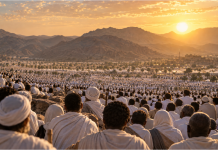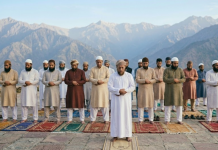
When the name of Prophet Muhammad (peace be upon him) is mentioned today, most people immediately think of the founder of one of the world’s major religions and the spiritual leader of millions. However, historical records reveal another, equally compelling story. It is the story of a brilliant diplomat, a just statesman, and a man who achieved the extraordinary: earning profound respect in the restless, tribally divided society of the Arabian Peninsula. And he did so not only among his followers, but also among Jews, Christians, and the polytheists of the time. How did he achieve this?
The Man You Would Trust With Your Life
Imagine pre-Islamic Mecca. A city pulsing with lucrative trade, yet simultaneously consumed by constant rivalry, blood feuds, and intrigue. In this harsh and ruthless environment, one man earned titles that speak volumes: Al-Amin (The Trustworthy) and As-Sadiq (The Truthful).
The reputation of his absolute honesty was so strong that even those who later fiercely disagreed with him on matters of faith continued to entrust him with their most valuable possessions without hesitation. A shining example of his natural authority is the famous incident during the rebuilding of the sacred sanctuary, the Kaaba. When leaders of influential clans were on the verge of killing each other over the right to set the revered Black Stone in place, they agreed that the dispute would be settled by the first man to enter the courtyard. That man was Muhammad. He did not rely on force, but on wisdom. He spread out his cloak, placed the stone in the middle, and invited representatives of all the rival clans to lift it together. Brilliantly simple, perfectly just. Bloodshed was averted, and his position as a respected arbitrator was confirmed.
Medina: Where an Alliance Ahead of Its Time Was Born
When the inhabitants of the oasis of Yathrib (present-day Medina), exhausted and on the brink of collapse from years of devastating, fratricidal wars between the Aws and Khazraj tribes, sought help, they were not primarily looking for a religious savior. They were looking for an impartial and wise arbitrator who could establish peace. They invited Muhammad.
Upon his arrival, he did something that completely shocked the world of that era. He did not rely on the dictate of a conqueror, but instead initiated the creation of the so-called Constitution of Medina (Sahifat al-Madinah). This historically groundbreaking document was not built on forced assimilation but united a diverse population into a single community (ummah).
- The Constitution explicitly named local Jewish tribes (such as the Banu Awf) as an equal and integral part of this community.
- It guaranteed them absolute freedom of religion and their own judicial and legal autonomy.
- It bound all the inhabitants of the city to mutual protection and solidarity against external enemies, regardless of who they prayed to.
In an era when world empires forced minorities into submission, the Prophet built a society based on pluralism and mutual agreement.
Christians as Honored Guests in the Prophet’s Mosque
Prophet Muhammad’s relationship with the “People of the Book,” and especially with the Christians of the region, could still serve as a textbook example of tolerance today. Trust worked both ways. When the early Muslims were cruelly persecuted in Mecca, they did not find refuge with their Arab tribal brethren, but with the Christian king Najashi (the Negus) in African Abyssinia. The Prophet knew that a just Christian ruler would not turn away the destitute.
An even more powerful message came in 631 CE, when a prominent Christian delegation from Najran in southern Arabia, consisting of bishops and scholars, arrived in Medina. They debated with the Prophet for several days. Although they parted ways on theological questions regarding the nature of God, Muhammad maintained absolutely unprecedented hospitality. When the time for the guests’ worship arrived, he allowed them to pray according to their Christian rites directly inside his own mosque. Ultimately, both sides concluded a peace treaty that guaranteed Christians full protection, freedom of faith, and the inviolability of their property.
The Promise to the Monks of Sinai
This respect was not just a pragmatic political calculation, but a deep-seated conviction. This is evidenced by the famous document known as the Ashtiname (Covenant of Peace), which the Prophet issued to the monks of St. Catherine’s Monastery on Mount Sinai. In it, he guaranteed the inviolability of their churches, exempted the clergy from taxes, and explicitly forbade anyone from forcing Christians into wars on the side of Muslims. In the covenant, he left a legacy stating that this promise of protection is binding upon believers “until the end of the world.”
Prophet Muhammad (peace be upon him) was not viewed by the society of his time merely as a visionary for a narrow group of followers. He was the glue. A quintessential diplomat who united the divided, protected the vulnerable, and managed to find common ground with people across the entire religious spectrum of his day. His story thus continues to show that true authority is born not from force, but from justice and mutual respect.