Imagine a warm evening on the Malabar Coast. The air is heavy with the scent of sandalwood, black pepper, and the salt of the Indian Ocean. On the horizon, dhows with their iconic triangular sails sway in the waves—ships that brought much more than precious cargo from the Arabian Peninsula. They brought men whose faces shone with tranquility and whose word was as firm as a rock.
This is how the story begins—the story of how the light of Islam first kissed the soil of India.
A Faith That Was Lived, Not Imposed
The first Muslims to step onto the shores of India were not warriors; they were merchants. Yet, they were no ordinary traders. Local rulers and common folk watched their daily lives with wonder. They saw men who, in the middle of a bustling marketplace, as soon as the shadows reached a certain length, would leave all negotiations aside, wash with clean water, and stand shoulder to shoulder to bow before the One God.
“Why do you not weigh more than you must?” local neighbors would ask, seeing that the Muslim merchants never cheated on their scales. “Because our Lord sees us,” was the simple reply.
This silent Da’wah (invitation to faith) through exemplary character (Akhlaq) achieved more than a thousand sermons. In 629 CE, the Cheraman Juma Mosque rose in Kerala—a silent witness to a time when Islam took its first, deep roots in the hearts of those who thirsted for truth and purity.
The Justice of a Young General
The story then shifts north, to the fierce waters of the Indus River. The year is 711 CE, and a young general, barely twenty years old, named Muhammad bin Qasim, arrives in Sindh. He did not come to despoil; he came to establish order where injustice had long reigned.
When bin Qasim entered the cities, the local people, accustomed to oppression, could not believe their eyes. The Muslim administrators guaranteed them freedom of worship and the protection of their property. Taxes were fair, and the courts did not care whether a man was rich or poor. History tells us that when bin Qasim eventually had to leave Sindh, the local inhabitants wept—so deeply had they been moved by the Islamic justice and compassion they had never known before.
The Row Where Differences Vanish
Perhaps the most powerful moment in this Indian narrative is the sound of the first Adhan. In India, a land then divided by a rigid caste system where one person was forbidden from even touching another, Islam brought the miracle of brotherhood.
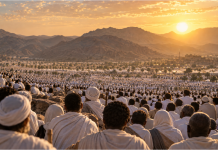
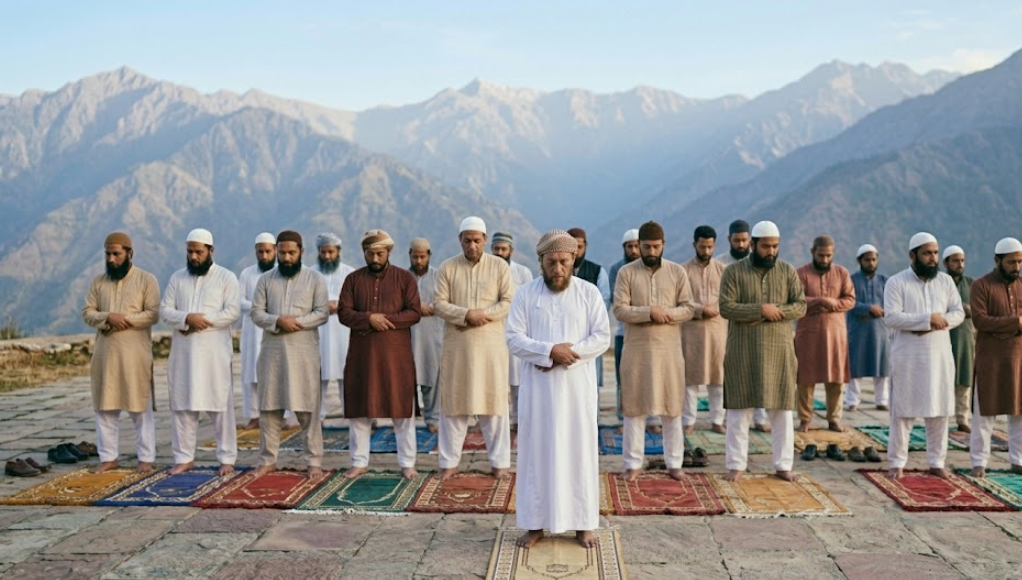
Imagine the sight: in a single row at the mosque stands an Arab captain, a Persian scholar, and an Indian peasant who, just yesterday, was forbidden from entering a temple. Their shoulders touch; their foreheads touch the ground together in Sujud. In that moment, there was no king or servant, only slaves of Allah. This absolute equality before the Creator was the beacon that drew thousands of souls like a lighthouse in the darkness.
A Bridge of Knowledge
Islam in India was not only a faith but also a great teacher. Muslim scholars studied Indian wisdom with respect and, in return, gifted India the treasures of Arabic science. In Baghdad, Indian texts on stars and numbers were translated. From this beautiful exchange, Urdu was born—the language of poets—along with an architecture that still takes the breath away of anyone who gazes upon the arched gates and soaring minarets reaching toward the Indian sky.
A Story That Never Ends
The dawn of Islam in India reminds us of one vital truth: Islam triumphs wherever character, justice, and truth are present. It is not a story of conquering territory, but of conquering hearts. It is a legacy that lives on in every prayer echoed from the Himalayas to the southern capes, and in every smile a believer gives to their neighbor.
This faith did not grow in India as a stranger, but as a tree that found good soil to bear fruit for the entire Ummah.