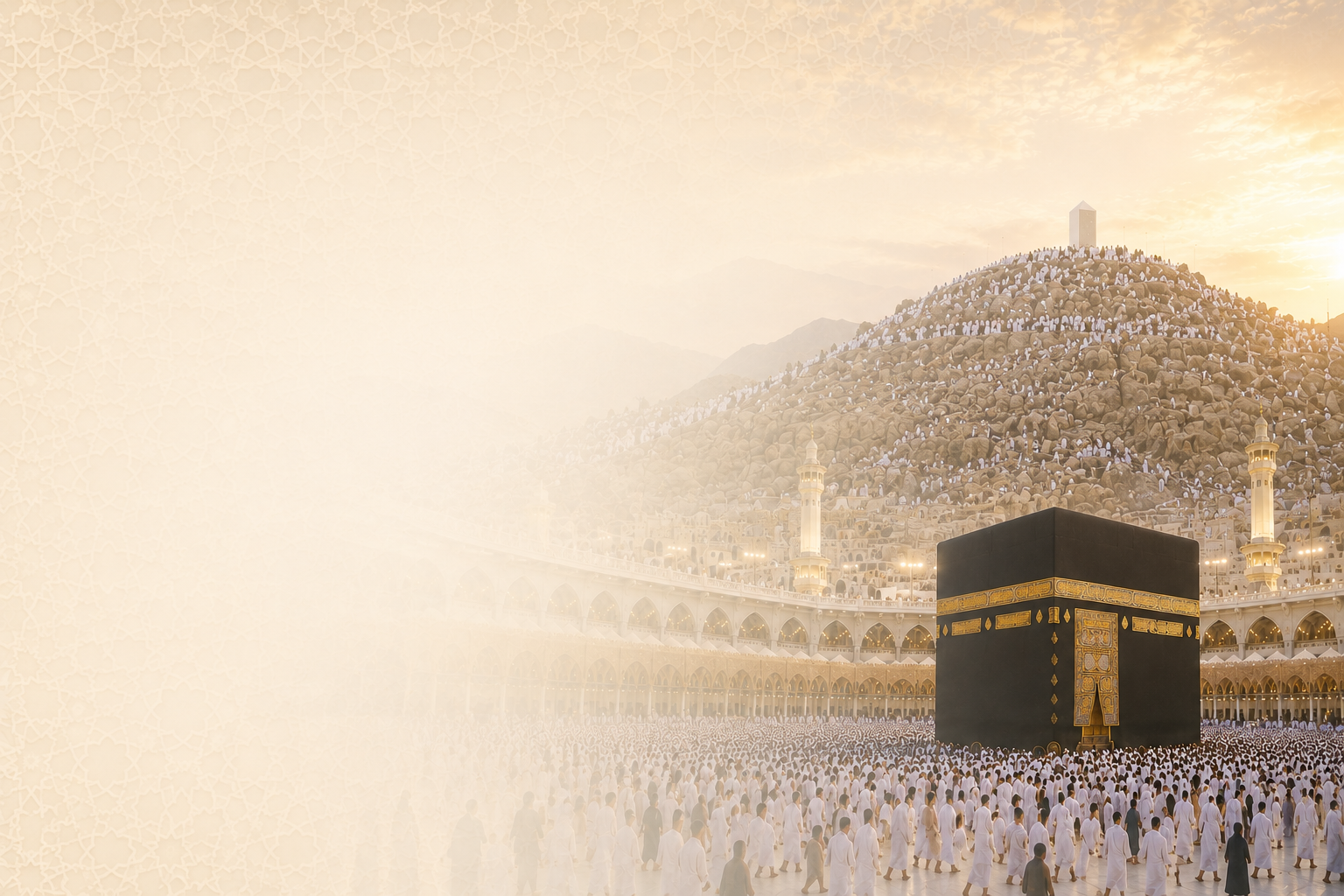
The first ten days of the month of Dhul-Hijjah represent an exceptionally significant period in Islamic consciousness, as they encompass profound religious, historical, spiritual, and social dimensions. Islam accords these days a special status because they bring together virtues and forms of worship that do not occur with such intensity during any other period of the year. Consequently, many Islamic scholars regard them as the best days of the year in terms of the significance of righteous deeds and the multiplication of spiritual reward.
The importance of these days stems from their close association with key religious rites, particularly the pilgrimage of Hajj, the Day of Arafat, and the ritual sacrifice (Udhiyah), as well as from their historical connection with the story of Prophet Ibrahim (Abraham), who symbolizes obedience, devotion, and complete submission to the will of Allah.
The impact of this sacred period is not limited to the individual spiritual sphere; rather, it extends into the ethical, social, and cultural fabric of Muslim society. It contributes to strengthening solidarity, mutual support, unity, and moral discipline. Accordingly, this study aims to examine the first ten days of Dhul-Hijjah from an academic perspective, focusing on their religious and historical aspects and their influence on both the individual and society.
I. The Religious Dimension of the First Ten Days of Dhul-Hijjah
The significance of the first ten days of Dhul-Hijjah is rooted in Islamic religious texts that emphasize their exceptional value among all other days of the year. The Qur’an states:“By the dawn, and by the ten nights.”(Surah Al-Fajr 89:1–2)
The majority of classical Qur’anic commentators agree that the phrase “the ten nights” refers to the first ten days of Dhul-Hijjah, which reflects their distinguished status in Islamic tradition.
Their significance is further confirmed in the Prophetic tradition (Sunnah). According to a hadith narrated by Ibn Abbas (may Allah be pleased with him and his father), the Prophet Muhammad (salla lláhu ʻalayhi wa sallam) said:“There are no days in which righteous deeds are more beloved to Allah than these days.” The companions asked, “Not even striving in the cause of Allah?” He replied: “Not even striving in the cause of Allah, except for a man who went out with his life and wealth and returned with neither.” (Sahih al-Bukhari)
What distinguishes this period is the concentration of the principal forms of Islamic worship within it: prayer, fasting, remembrance of Allah (dhikr), supplication (du‘a), charity, Hajj, and ritual sacrifice. This unique convergence makes these days an extraordinary spiritual season.
The culmination of this period is the Day of Arafat, regarded as one of the most significant days in the Islamic calendar, associated with divine mercy, forgiveness, and the acceptance of prayers.
II. Historical and Civilizational Dimension
1. Connection to the Abrahamic Legacy
The first ten days of Dhul-Hijjah are deeply connected to the legacy of Prophet Ibrahim (Abraham), who constitutes one of the foundational historical pillars of Islamic faith. These days commemorate his trial of obedience when he was commanded to sacrifice his son as an expression of complete devotion to Allah.
This story represents the highest example of obedience, faith, and trust in divine decree. Consequently, the ritual sacrifice (Udhiyah) is not merely a ceremonial act, but also a symbolic and educational reminder of the values of sacrifice, devotion, and prioritizing spiritual values over material attachments.
2. Hajj as a Historical and Universal Religious Institution
One of the most important historical dimensions of this period is the pilgrimage of Hajj, whose origins trace back to the construction of the Kaaba by Prophet Ibrahim and his son Isma‘il (Ishmael). In Islamic tradition, this pilgrimage was later restored by Prophet Muhammad (salla lláhu ʻalayhi wa sallam) in its pure monotheistic form.
From a civilizational perspective, Hajj is not merely an individual religious act, but also a global spiritual and social institution symbolizing the unity of the Muslim Ummah, equality among people, and the universal character of Islam regardless of ethnic, linguistic, or geographical differences.
3. The Day of Arafat and the Completion of the Religious Message
The Day of Arafat holds particular historical significance because it was on this day that the following Qur’anic verse was revealed: “This day I have perfected for you your religion, completed My favor upon you, and have chosen for you Islam as your religion.” (Surah Al-Ma’idah 5:3)
This day therefore represents a major milestone in Islamic history, symbolizing the completion of the religious and legislative framework of the Islamic message.
III. Important Dates for the Dhul-Hijjah Season in 1447 AH / 2026 CE
The significance of religious occasions is closely connected to the practical temporal awareness of believers as they prepare to fulfill their religious obligations. The key dates for this year’s Dhul-Hijjah season are as follows:
- Beginning of Dhul-Hijjah (1 Dhul-Hijjah 1447 AH): Monday, 18 May 2026
This marks the commencement of one of the most significant periods of worship and spiritual renewal in the Islamic year. - Day of Arafat (9 Dhul-Hijjah 1447 AH): Tuesday, 26 May 2026
One of the most significant days of the year, particularly recommended for those not performing Hajj to engage in fasting, prayer, remembrance of Allah, and personal reflection. - Eid al-Adha (10 Dhul-Hijjah 1447 AH): Wednesday, 27 May 2026
A day of religious joy and communal celebration, combining the Eid prayer, ritual sacrifice, and the strengthening of family and social bonds.
IV. Psychological and Educational Impact on the Individual
The first ten days of Dhul-Hijjah provide a valuable opportunity for spiritual and ethical renewal on an individual level. Among their principal benefits are:
1. Strengthening Spiritual Awareness
This period encourages believers to reflect more deeply on their relationship with Allah, renew sincerity, engage in repentance, and restore inner spiritual balance.
2. Enhancing Self-Discipline and Moral Restraint
Regular religious observances, fasting, and conscious spiritual engagement foster patience, perseverance, and the ability to control personal desires.
3. Deepening Religious Identity
The collective experience of this season and the awareness of Muslim unity during Hajj reinforce the individual’s sense of belonging to the global Muslim community.
V. Social Impact
1. Strengthening Social Solidarity
Ritual sacrifice, charitable giving, and support for those in need contribute to reducing social inequalities and reinforcing the principle of collective social responsibility.
2. Strengthening Family and Interpersonal Relationships
Religious holidays traditionally encourage visits, the strengthening of kinship ties, and active social interaction.
3. Renewal of Ethical Values
This season promotes values such as mercy, generosity, tolerance, kindness, and moral integrity.
4. Preservation of Religious and Cultural Identity
Shared religious occasions facilitate the transmission of values and traditions to future generations and contribute to preserving the cultural continuity of Muslim society.
Conclusion
An academic analysis of the first ten days of Dhul-Hijjah demonstrates that they are not merely a seasonal religious occasion, but rather a comprehensive system of religious, historical, educational, and social meanings. This period connects the Muslim with the spiritual legacy of the prophets, particularly Ibrahim and Muhammad (salla lláhu ʻalayhi wa sallam) , while simultaneously shaping personal character and social relationships.
Accordingly, this period should not be understood merely as a time for performing religious rituals, but rather as a comprehensive opportunity for the spiritual, ethical, and social renewal of both the individual and the wider community.